The planting
The vineyard was planted in 2016/2017. We made a conscious decision to use the classic grape varieties, Vitis Vinifera, partly because we wanted to produce a sparkling wine very similar to champagne, and partly because we do not believe in fungus-resistant varieties.
Following a thorough soil analysis, we enriched the soil with compost and planted a mixture of flowers. Furthermore, on the advice of our farmer neighbours, we installed a new drainage system. Depending on the soil and the grape variety, we selected various American rootstocks, which were then grafted with Chardonnay and Auxerrois for the white wine grapes, and with Pinot Noir, Pinot Gris and Gamaret for the red wine grapes.
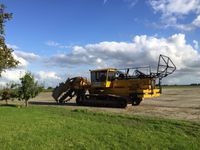
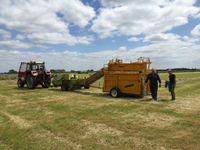
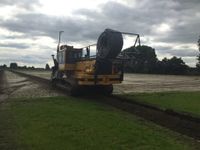
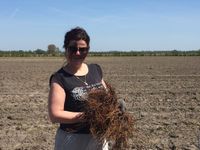
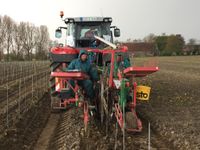
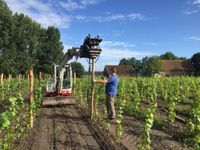
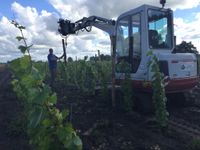
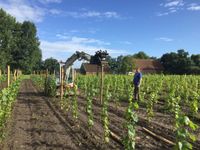
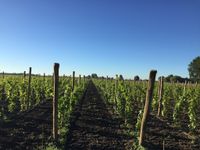
The first 6,000 vines we planted were Chardonnay and Auxerrois. Planting was carried out using a GPS-guided machine and was completed in a single day. A year later, we did the same but with the other 6,000 vines of the Pinot Noir, Pinot Gris and Gamaret varieties. The graft protruded a few centimetres above the ground and was marked by a small iron rod. We then had to drive posts into the ground to attach the wires that would support the vines. We opted for untreated wood to achieve as natural and environmentally friendly a look as possible. At the time, we didn’t realise that our choice of wooden posts would mean a lot more extra work. The wires are needed to support the vines. Wires have been stretched at four different levels to support the plant as effectively as possible throughout its growth. Stretching a single wire meant walking 12 km... for Marnix.
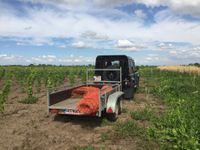
The first two years were truly back-breaking work to maintain the vineyard. We had opted for no grass between the rows. That meant weeds such as thistles, nettles and peachweed had to be removed by hand. Unfortunately, mechanical weeding was not possible due to the delicate young plants.
Originally, our intention was to work biodynamically. We did our best to do this for two years by spraying compost tea, placing cow horns in the ground and taking the phases of the moon into account. But unfortunately, things went wrong; the plants visibly weakened. Given the considerable investment, we switched to a traditional approach involving observation and protecting the vines only when necessary. We spray only with fungicides and not with herbicides. All weeds are now removed mechanically.
In 2018, we had our first good harvest of Chardonnay grapes. Unfortunately, the Auxerrois plot was too badly affected by botrytis to be able to make wine from it. It was a valuable and costly lesson.